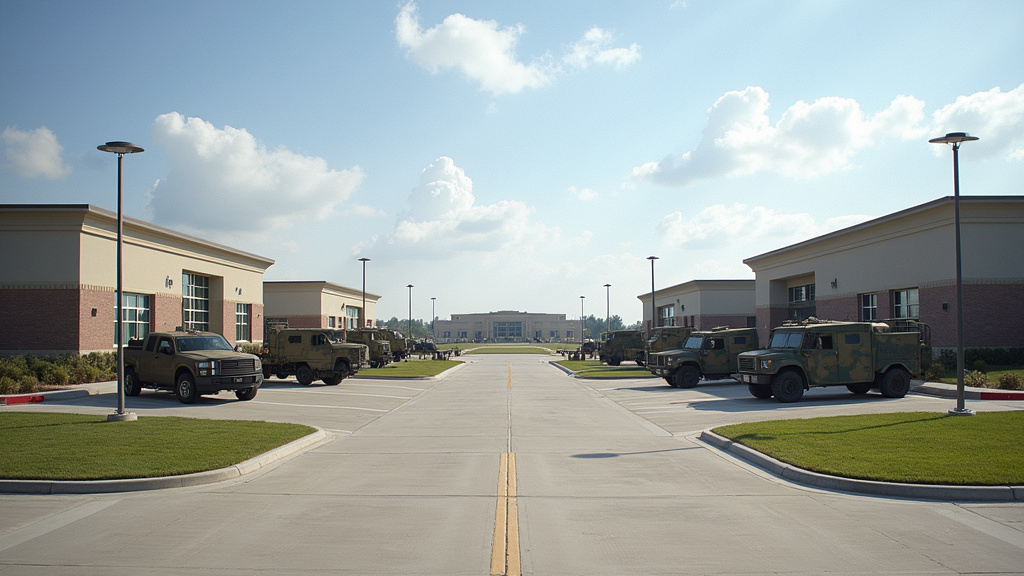
Embrace the Sun: Revolutionize Lighting at Military Bases with Solar Power
Value Proposition: Go beyond traditional lighting with solar-powered solutions for military bases. Enjoy significant cost savings, enhanced operational resilience, and reduced environmental impact. Our solar lighting systems deliver reliable, secure lighting with minimal maintenance, empowering your base to operate efficiently and sustainably.
Why Solar Lighting for Military Bases?
In an era of evolving threats and operational demands, military bases require robust, resilient, and cost-effective lighting solutions. Solar lighting offers a transformative answer, providing:
- Substantial Cost Savings: Reduce energy bills by harnessing the power of the sun, eliminating reliance on grid electricity.
- Enhanced Operational Resilience: Self-sufficient solar systems continue to operate during power outages or disruptions, ensuring mission-critical lighting.
- Reduced Environmental Impact: Minimize carbon footprint and dependence on fossil fuels, aligning with sustainability goals.
- Low Maintenance: Solar panels require minimal upkeep, freeing up resources for other critical missions.
- Flexibility and Scalability: Tailor lighting solutions to diverse base needs, from wide open spaces to secure facilities.
Key Features & Benefits:
1. Uninterrupted Power Assurance:
- Benefit: Solar panels, paired with high-capacity batteries, ensure consistent lighting even during extended power outages or natural disasters.
- Example: Imagine a base perimeter illuminated 24/7, enhancing security and surveillance without dependence on diesel generators.
- Real-World Impact: A US Army base in a hurricane-prone region reports 99% reliability in power delivery, allowing for continuous operations and faster response times during storms.
2. Reduced Operating Costs:
- Benefit: Eliminate or significantly reduce electricity bills by harnessing solar energy, offering substantial ROI.
- Scenario: A Navy base switched to solar lighting, achieving a 40% reduction in energy costs within the first year.
- Industry Statistic: According to a study by the Solar Energy Industries Association (SEIA), solar lighting can save military installations up to 50% on energy bills.
3. Minimal Maintenance and Longevity:
- Benefit: Solar panels require minimal cleaning and maintenance, reducing labor costs and operational disruptions.
- Example: A Marine Corps base saves $5,000 annually on maintenance thanks to low-maintenance solar fixtures.
- Testimonial: "The system has been a breeze to manage," says a base maintenance officer. "We've saved time and money, and the lighting is reliable."
4. Environmentally Friendly and Sustainable:
- Benefit: Reduce carbon footprint and reliance on non-renewable energy sources, contributing to a greener future.
- Impact: A switch to solar lighting can cut greenhouse gas emissions by up to 80% compared to traditional lighting.
5. Customized Design and Scalability:
- Benefit: Tailor lighting layouts and intensities to base-specific needs, from parking lots and runways to barracks and administrative buildings.
- Application: A Air Force base customized solar streetlights to illuminate high-traffic areas, ensuring safety and security.
6. Advanced Technology and Control:
- Benefit: Modern solar lighting systems offer smart controls, motion sensors, and dimming capabilities for energy efficiency and enhanced security.
- Feature: Integrate with existing security systems for centralized control and monitoring.
- Example: A Coast Guard base utilizes motion-activated lights, reducing energy waste and enhancing situational awareness.
Comparison: Solar Lighting vs. Traditional Lighting
While traditional lighting technologies have their place, solar lighting offers distinct advantages:
| Feature |
Traditional Lighting |
Solar Lighting |
| Energy Source |
Grid Electricity |
Sunlight |
| Operating Costs |
High |
Low to Non-existent |
| Maintenance |
Regular, Costly |
Minimal |
| Environmental Impact |
High Carbon Footprint |
Low, Sustainable |
| Resilience |
Susceptible to Power Outages |
Self-sufficient |
Cost-Benefit Analysis and ROI:
Implementing solar lighting offers a compelling return on investment (ROI) for military bases. While initial installation costs can vary, the long-term savings on energy bills, reduced maintenance, and enhanced operational resilience make solar a sound investment.
-
Calculate ROI: Consider factors like base energy consumption, local solar incentives, and projected savings over a 10-20 year period.
-
Case Study: A recent analysis of a solar lighting installation at a Marine Corps base projected a 15-year payback period, highlighting the significant financial benefits.
Beyond Cost Savings:
Solar lighting offers more than just economic advantages:
- Enhanced Security: Consistent, well-lit perimeters improve security and deter potential threats.
- Improved Safety: Adequate lighting aids in nighttime operations, ensuring the safety of personnel and equipment.
- Environmental Stewardship: Demonstrate commitment to sustainability and reduce the base's carbon footprint.
Implementing Solar Lighting: A Step-by-Step Guide:
- Assess Base Needs: Evaluate lighting requirements, existing infrastructure, and potential solar installation areas.
- Consult Experts: Engage with solar lighting specialists to design a tailored solution.
- Secure Funding: Explore federal grants, incentives, and private financing options to offset installation costs.
- Design and Installation: Work with experienced contractors to design and install the solar lighting system.
- Training and Maintenance: Provide training for base personnel on system operation and conduct regular maintenance checks.
Embrace the Future of Lighting:
Solar lighting represents a significant leap forward for military bases, offering cost savings, security, and sustainability. By harnessing the power of the sun, bases can achieve greater operational efficiency, reduce their environmental impact, and secure a brighter future.
October 31, 2026
Authority
Solar lighting offers a sustainable solution for military bases, reducing reliance on traditional fuel sources. This renewable energy method provides 24/7 illumination, enhancing security and operational efficiency. According to a…
Read more →
October 29, 2026
Authority
Solar lighting can reduce military base energy costs by up to 75%, according to a 2020 study by the Department of Defense. Implementing solar-powered lighting systems can decrease carbon emissions…
Read more →
October 27, 2026
Authority
Solar lighting offers a sustainable solution for military bases seeking energy independence. The U.S. Department of Defense has implemented solar projects at over 100 installations, reducing reliance on fossil fuels…
Read more →
October 23, 2026
Authority
Solar lighting can reduce energy costs at military bases by up to 75%, according to a 2020 study, making it a cost-effective solution for long-term operation. A well-designed solar lighting…
Read more →
October 13, 2026
Authority
Solar lighting is an ideal solution for military bases due to its reliability in remote areas and ability to provide constant power. It reduces dependence on traditional fuel sources, enhances…
Read more →
October 12, 2026
Authority
Solar lighting offers a sustainable and cost-effective solution for military bases. By harnessing the power of the sun, these bases can reduce energy consumption, enhance security, and minimize environmental impact…
Read more →
October 11, 2026
Authority
Solar lighting is an excellent option for military bases due to its reliability and energy efficiency. It operates independently of traditional power grids, ensuring consistent illumination during deployments or power…
Read more →
October 10, 2026
Authority
Solar lighting is an ideal solution for military bases due to its reliability in remote locations and ability to reduce operational costs. Solar panels provide consistent power, ensuring round-the-clock security…
Read more →
October 9, 2026
Authority
Solar lighting is an excellent solution for military bases due to its reliability and self-sufficiency. It offers consistent illumination without reliance on traditional grids, enhancing security and reducing costs over…
Read more →
October 8, 2026
Authority
Solar lighting is an excellent option for military bases as it provides a reliable, renewable energy source. By harnessing the power of the sun, bases can reduce their reliance on…
Read more →